Saturday, 16 March 2024

'Fevre Dream' - George R.R Martin


This book caught me by surprise, for around eighty pages I found it frustratingly cliched and I could easily have given up, but then, a chapter that completely changed the dynamic of the book and set the tone for a fast-paced intriguing drama. Two incredibly different characters one a journeyman steamboat Captain and the other a reformist vampire 'Bloodmaster" form an unlikely partnership that steers them head on to the choices between good and evil.

Abner Marsh and Joshua York form a partnership the strength of which time and time again Abner our steamboat Captain becomes extremely cautious of. With the partnership near breaking point we have a scene where Joshua our vampire must tell Abner the whole truth to allow things to continue, what follows is an incredibly well-told story of his evolution from vampire boy to a century old 'Bloodmaster'. You feel Joshuas mental dilemma in deciding that the need to reveal his story out ways the risk, but also you get a real insight into the intelligence, logic and reasoning of Abner.
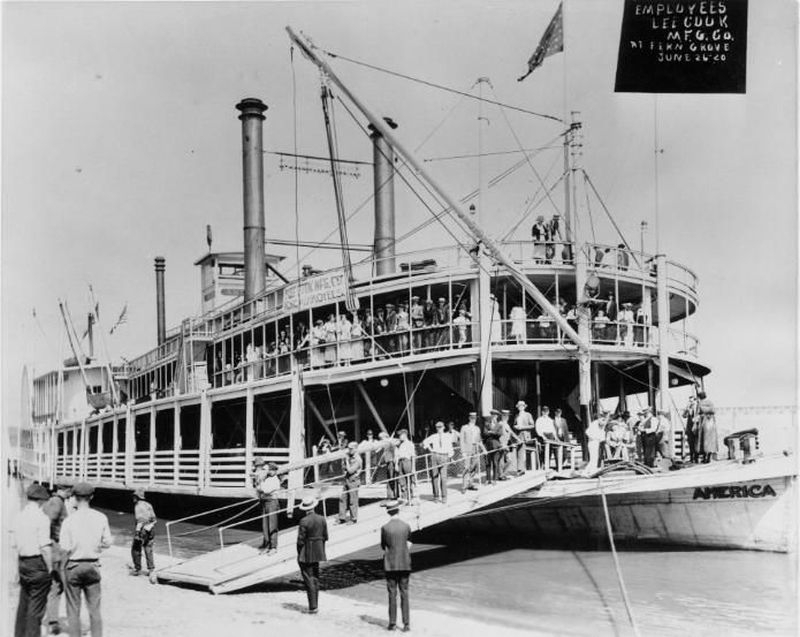
We meet incredibly evil characters throughout not all are vampires. Along with being a great story it also explores questions like whether it is possible to change our nature because it’s the right thing to do. The abolitionist movement in America, and how we treat out fellow man.


From the author who went on to give the world ‘Game of Thrones' this 1982 story is an excellent way to start to explore R.R. Martins other works.


Marks out of ten 8.5

Monday, 11 March 2024

'Still Life' - Louise Penny


I recently had the pleasure of delving into Louise Penny's "Still Life," our book club's chosen novel for the month. Gripped by the narrative, I managed to complete it in just two sittings.

The story unfolds with Chief Inspector Armand Gamache and his team from the Surêté du Québec being called to the scene of a suspicious death in the tranquil village of Three Pines, situated south of Montreal. Chief Inspector Gamache, our initial encounter with whom paints him as an intriguing and intelligent man, leads the investigation. Throughout the book, we discover that his crime-solving prowess stems from a profound understanding of people, their nature, and the intricacies of their daily lives.
The victim in question is Jane Neal, an elderly and cherished resident of Three Pines, discovered lifeless in the woods. Despite the locals attributing her demise to a tragic hunting accident, Gamache harbours doubts and is soon convinced that Jane Neal met with foul play—she was murdered.

"Still Life" boasts a stellar cast of eccentric, complex, and endearing characters, with Clara playing a pivotal role in the unfolding narrative. The story introduces numerous suspects, some prompting exclamations of disbelief while others elicit a strong desire for their guilt. Throughout the book, it becomes evident that nearly every character harbours layers of secrets—some innocent, others decidedly dark.

In keeping with the mystery genre, divulging too much would spoil the intrigue. Suffice it to say, "Still Life" is a delightful mystery that kept me guessing until the very end—a puzzle I did not manage to solve.

Rating: 7.5 out of 10

Sunday, 10 March 2024

'And Then There Were None' by Agatha Christie

‘And Then There Were None’ is a refreshing standalone novel by Christie that steers away from the normal snobbery found in her other works. The well-crafted characters of this story boast clear and captivating backstories, enhancing the overall narrative. It's no surprise that this is Christie's best-selling book, given its compact yet impactful storytelling.


The brevity of the book does not diminish it in any way; in fact, it packs a powerful punch, making it a compelling read. The influence of this suspenseful tale is evident in its widespread impact on literature, film, and theatre.


However, one drawback lays with the missed opportunity for guests to question which of them had the finances required to fund the devious plan, costs such as the island rental, and the cash incentives paid to get other guests to attend. If they had asked that it would have narrowed down the possibilities of discovering Mr U.N.Owen's real identity. Additionally, the dated attitudes and language used throughout the story may feel old-world to modern readers' sensibilities.


Marks out of 10 - 8.5

'The People on Platform 5' by Clare Pooley

We are invited to board the daily commuter train from Hampton Court to Waterloo Station, where ordinary lives intersect in unexpected ways. While the premise promises intrigue and human connection, the execution leaves so much to be desired and what we get are:

Predictable Plot Twists:  Sanjay and Emmie’s eventual union? Foreseeable from the moment they shared that grape-induced Heimlich manoeuvre. Toby’s betrayal? As transparent as the train windows. It’s as if the author handed us a timetable of events, and we obediently followed along.

Convenient Resolutions: The story unfolds with the precision of a Swiss watch. Every character’s predicament—be it love, career, or personal growth—magically resolves itself. Candida’s greed? Predictable. Martha’s quirky existence in a David Attenborough-inspired world? Amusing, but hardly surprising. Even the weather cooperates as if the clouds themselves conspired for a happy conclusion.

Iona and Bea: Iona and Bea’s friendship shines like a beacon amongst the mundane. Their bond, forged over shared secrets and dog walks, tugs at our heartstrings. Their last chapter, filled with warmth and acceptance, is the novel’s saving grace. But alas, it’s a solitary oasis in a desert of predictability.

Lost Opportunities: The train platform becomes a missed opportunity— What about the grumpy ticket collector with a hidden past? Or the mysterious woman who always wears mismatched socks? These characters remain mere sketches, their potential untapped.

Candida’s One-Dimensional Greed: The money-grabbing antagonist embodies clichés. Her motivations are as transparent as the train windows. We yearn for complexity, and shades of grey, she remains resolutely black-and-white.

Final Thoughts: The book chugs along predictably, its wheels firmly on the rails. While some moments sparkle—a stolen glance, a shared umbrella—the overall journey lacks the thrill of unexpected detours. In summary, the novel offers comfort and familiarity. For those seeking literary surprises, this platform may not be the right stop. 🚂📖

Marks out of 10 a lucky 5

'The Sisters' by Claire Douglas


This book left me disappointed on so many fronts.  

Firstly, the book relies heavily on a juvenile fascination with the physical attractiveness of its characters, which at times feels gratuitous and lacks depth.  

The novel's emphasis on the importance of outward beauty perpetuates a shallow perspective, detracting from the potential depth and complexity that could have enriched the storyline. We have a story where the main characters are all body beautiful anyone else hardly worth a mention. Body shaming and negative role models for young women very much came to my mind.   

Although the dynamic of the relationship of twins should be an interesting topic all the negatives of the book prevented it from being so.  

The relationship between Ben and Bea mirrored very much the dynamics of the film ‘Cruel Intentions,’ which lacks originality and contributes to a sense of predictability throughout the book.  

 The repetitive nature of the interactions among Ben, Bea, and Abi, especially within the context of their romantic entanglements and cruelty to one another, diminishes the overall narrative quality and fails to bring meaningful developments to the forefront.   

Furthermore, the story takes an improbable turn with an ending that allows someone to evade the consequences of attempted murder solely because of love. This unrealistic resolution erodes the story's credibility, as it seems implausible that Abi's parents, among others, would not seek justice for such a serious crime.  

‘The Sisters’ presents a narrative fraught with shallow characters and a tired exploration of love and competition, all of this left me wanting more substance and originality.  

Marks out of ten – A generous 4  

Friday, 11 October 2019

Joker


I have not stopped thinking about this film. Although the DC Comics Batman theme loosely runs through It. This film is no light comic tale. It highlights how badly society treats mental health, the need for strong support networks, access to medication and most topical in the USA you do not give seriously mentally ill people access to guns.

The film shows how a damaged febrile society can latch on to an idea, a person however mad and embrace their world, a world where real anarchy becomes the norm and is celebrated. 


To go back to DC world, Alfred once told Batman a story of his past explaining that some people can't be reasoned with or bought all they want is to see the world burn, Arthur Fleck, the Joker played by Joaquin Pheonix was 100% as Alfred described and some.


Pheonix, wow what a performance you could easily forget that the man was actually acting. Not forgetting a strong support cast including Robert De Niro.


That the people behind this great film were responsible for the hilarious Hangover is an astonishing thought with the films so vastly different. Todd Phillips directing both and being a joint screenplay writer on Joker and the person with the initial idea of this film.  


When Silence of the Lambs (SOTL) was released, I bought in to it completely, watching the film countless times reading the series of books and looking forward to the later released prequels and the one sequel. In the psychological thriller genre for me, SOTL and its author Thomas Harris set the bar, that film also had career defining performances for both Jodie Foster and Anthony Hopkins. Unfortunately, Hollywood agreed and a string of copycats followed, pale imitations.  Having seen Joker my hope is that this will not be the case again as they will just roll out a lot of films more and more violent, which would do the understanding of mental health in society and its sufferers a great disservice and missing all the well-made points from this film. They will just become gore fests which Joker was not.  


This film should be a one off it did its job perfectly.  A serious thank you to all who made it. Hannibal, Anthony Hopkins after all of these years step aside the bar has now gone up.


Thursday, 15 January 2015

1977 And We Are Going Mad

Part of being 14 in 1977 (a snippet).

Like most people of my age in 1977 on a Sunday night we would listen to Radio 1’s top 20 and then on Tbursdays avidly watchTop Of The Pops on the BBC to see who was number 1 in the pop chart (it seemed important at the time), you needed to know who everyone else would be talking about at school. Until the 1st of July 1977 things had been poor for a while to say the least below are some highlights.

Tina Childs, The Wurzels, Demis Roussos, Pussycat, Johnny Mathis, David Soul, The Manhattan Transfer had all had no 1’ singles.  The best selling song of 1976 was Brotherhood of Man with Save All Your Kisses for Me, and in 1977 It was the shocking BollockKintyre that apparently sold over 2 million copies (shame on them all), all of it boringly dire. Yes you may have fallen into the trap of liking the odd song, but on the whole a very sad state of affairs.

Top of the Pops would be packed with this dross and more of the same, mums and dads were happy letting you watch this light entertainment. 

On the 1st July 1977 it all changed, safe went out of the window.  Love them or hate them in 1977 something came along that rocked the establishment, and thankfully opened the door to much of the far better British music that was to follow.  After the shit that had gone before it on that particular show I vividly remember watching the British music scene being turned upside down in front of my eyes.  Here was something that actually made you listen, something with energy something new.  Without them, would the Jam and New Wave have taken off, would Oasis have stood a chance, look at this video and then visualise Radiohead’s Creep video, the vacant looks the hair.  They spawned an awakening in Britain’s music industry, fashion and culture, they were at that particular time incredible and their album to this day is a classic.  They had a lead singer who by a force of nature demanded your attention. They made you question not just the music industry but society and its institutionalised ideas. You dread to think were we would be without them, still singing about combined harvesters, yellow ribbons or rocking along to the Muppets (not just the puppet variety)?

NEVER MIND THE BOLLOCKS (and at the time there was bucket loads).

http://vimeo.com/47600916